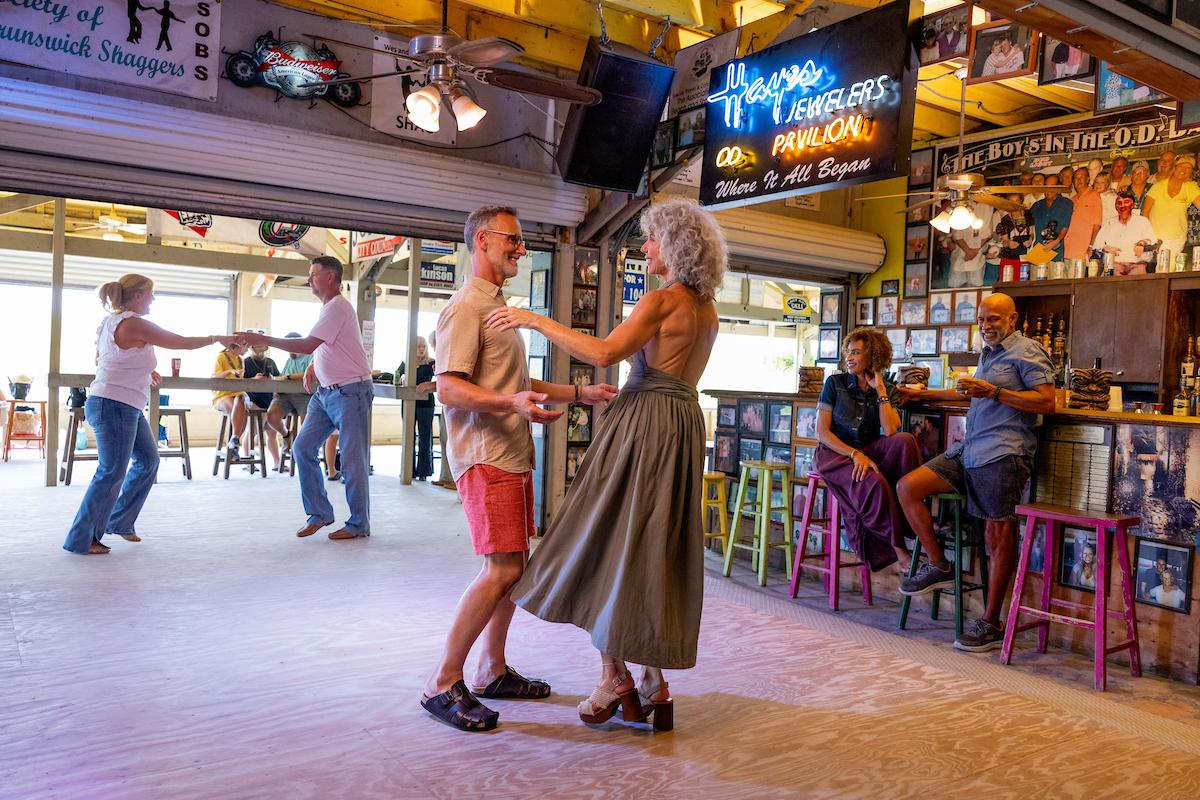
Carolina Beach Music: The Sound, History & Culture of the Carolinas
Explore the history of Carolina Beach Music, from Seabreeze and Wrightsville Beach to the Carolina Shag, The Embers, classic songs and the music still played at North Carolina weddings today.
If you’re from certain parts of the Carolinas, you’ve probably heard Beach Music for most of your life.
Your parents listened to it. Maybe they dragged you to festivals when you were a kid. It might have played during every road trip to Wrightsville Beach, Carolina Beach, or Myrtle Beach. Or maybe it was the soundtrack to the weekly drive to golf, dance, or riding lessons in Pinehurst.
For a lot of Carolinians, Beach Music is just sort of… there.
It’s part of the furniture.
As North Carolina wedding DJs, we still run into this all the time. A couple might tell us they don’t specifically listen to Beach Music, and then five minutes later hand us a list containing The Embers, The Tams, Chairmen of the Board and three songs their parents absolutely have to hear.
That’s Carolina.
But step outside of the region and try explaining Beach Music to someone who didn’t grow up with it, and things get weird pretty quickly.
Carolina Beach Music has been described as one of America’s great musical anachronisms, something of an American counterpart to Britain’s Northern Soul scene, and one of several legitimate contenders for the “Sound of Carolina,” sharing that title with bluegrass, jazz, funk and other musical traditions with deep roots here.
And its history is considerably more interesting than “old people dancing at Myrtle Beach.”
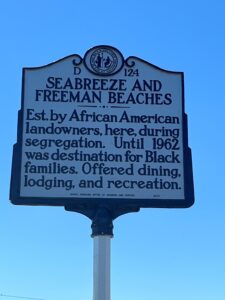
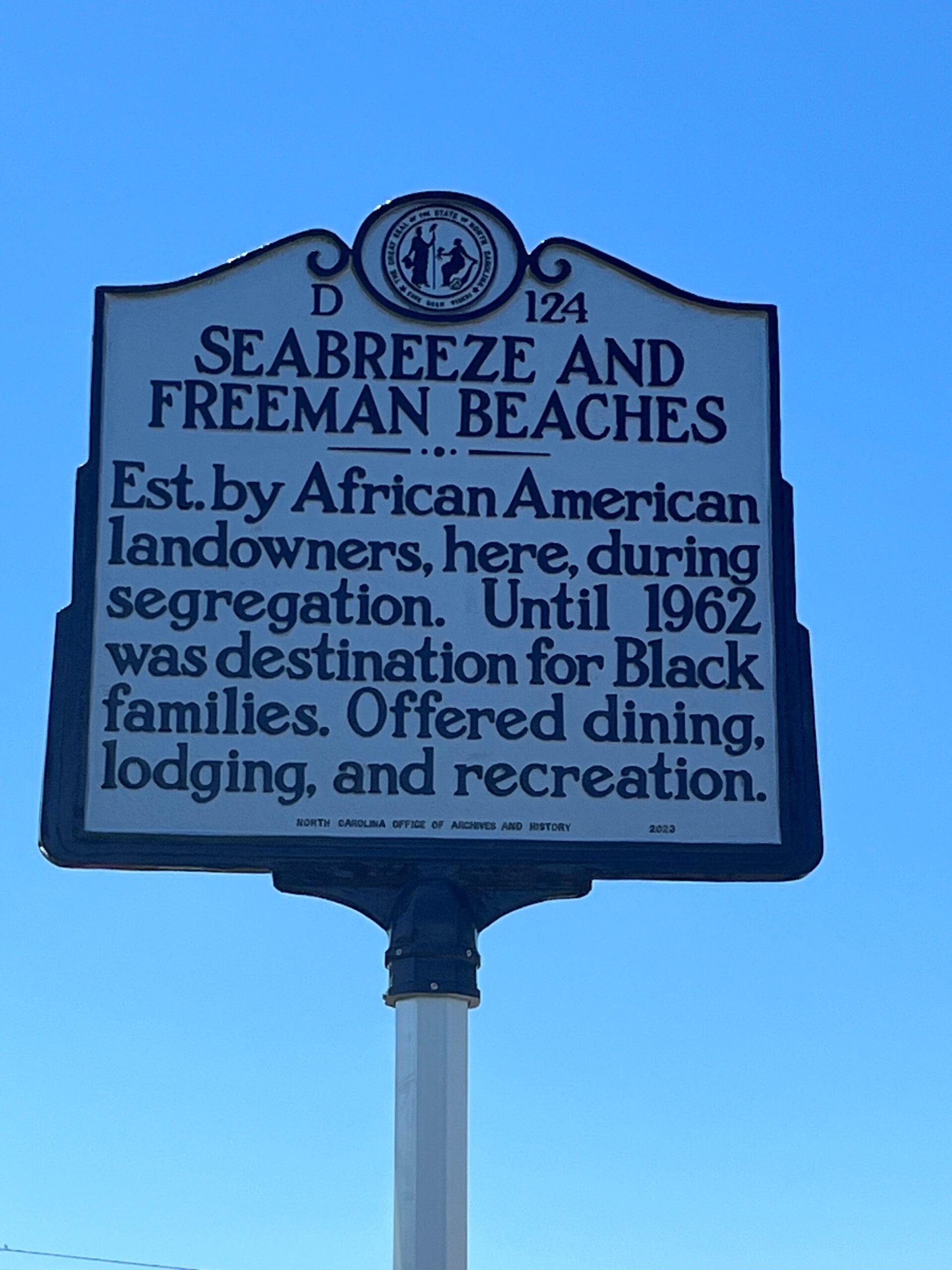
The Seabreeze and Freeman Beach communities near Carolina Beach were among North Carolina’s most important Black coastal resorts during segregation. Their dance halls, juke joints, live R&B, jazz, and nightlife helped create the cultural environment from which Carolina Beach Music developed.
The History and Development of Beach Music in North Carolina and South Carolina
Beach Music, or as DJ Frankie Hagan once dubbed it, “Southern approved Motown,” began taking shape in the late 1940s and early 1950s.
World War II was over. Young veterans were home. Teenagers and twenty-somethings wanted places to go, people to meet, music to dance to and probably a little distance from their parents.
At the same time, the American South was still deeply segregated.
White radio was dominated largely by pop and country music, while Black audiences were listening to the rapidly developing sounds of rhythm and blues.
Along the Carolina coast, though, those worlds started bumping into each other.
Places like Seabreeze and Freeman Beach near Carolina Beach, Atlantic Beach in South Carolina, and the clubs and dance halls around Myrtle Beach became important centers of Black entertainment and nightlife.
Seabreeze alone developed restaurants, hotels, amusement attractions, dance facilities and juke joints. Across the water, Freeman Beach became so associated with live rhythm and blues and jazz that people called it Bop City.
And white kids heard the music.
They liked it.
A lot.
Young white listeners began seeking out R&B records that weren’t necessarily being played on mainstream radio, sometimes traveling to Black-owned record stores to find them. DJs, jukebox operators, dancers, record collectors and teenagers gradually built an entire regional music culture around records that much of respectable Southern society wasn’t particularly interested in them hearing.
And I want to double down on that point for a minute, because I think it’s one of the most interesting parts of the story.

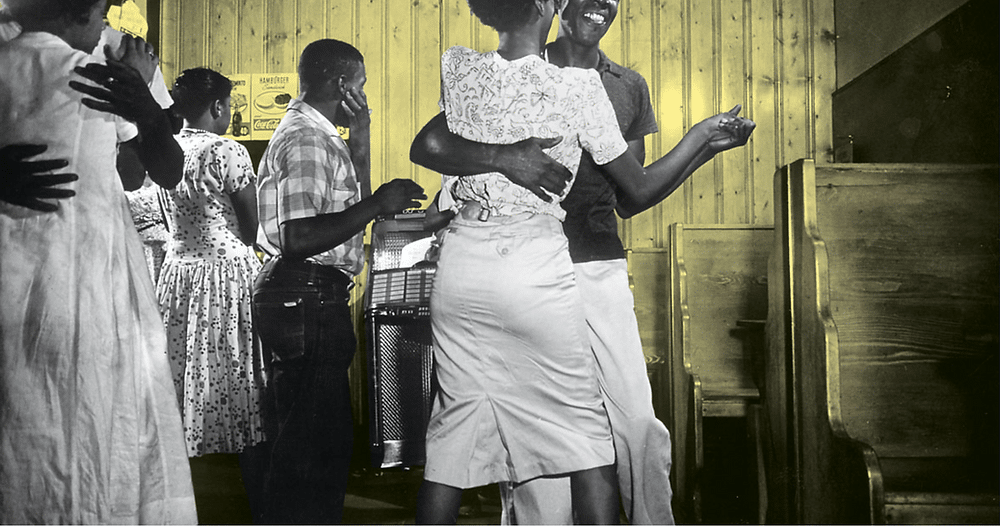
Music and dancing were central to life at Seabreeze, the historic Black resort community south of Wilmington. By its peak, Seabreeze included dance halls, restaurants, an amusement park, and numerous juke joints where R&B, soul, jazz, and dance music filled summer nights along the North Carolina coast. Credit to Cape Fear Museum of History and Science, Wilmington, North Carolina.
Beach Music Was, in Part, a Rebellion Against the Segregated South
It’s easy, 70 years later, to turn Beach Music into something quaint.
Matching shirts. Shag contests. Festivals. Old convertibles. A cold beer in North Myrtle Beach.
But the culture that produced it wasn’t always considered quaint.
Black families traveling to destinations like Seabreeze and Freeman Beach could face harassment simply trying to get there. The North Carolina Department of Natural and Cultural Resources notes that the resorts existed specifically because Black families were excluded from white beach resorts under Jim Crow.
Segregation determined where people could eat, swim, dance, shop and stay.
And against that backdrop, you had young white Southerners deliberately seeking out Black music, buying records from Black businesses, copying Black dances and building their own youth culture around music their parents’ generation frequently regarded as dangerous, sexual, immoral or simply inappropriate.
A lot of the people breaking those social rules were kids.
That matters.
The Beach Music scene of the 1950s has some parallels with rave and underground dance culture in the 1990s. Young people created their own spaces, developed their own music culture and inevitably attracted the attention of adults convinced that civilization was ending.
Police attention, moral panics, complaints about dancing, race, sexuality, alcohol and “degenerate” music aren’t particularly new inventions.
American history is full of them.
Apparently civilization has been approximately six months away from collapse for about 200 years.
But that tension is part of why Beach Music mattered.
It wasn’t simply a playlist.
For a generation of young Carolinians, it represented something different from the segregated culture their parents had inherited.

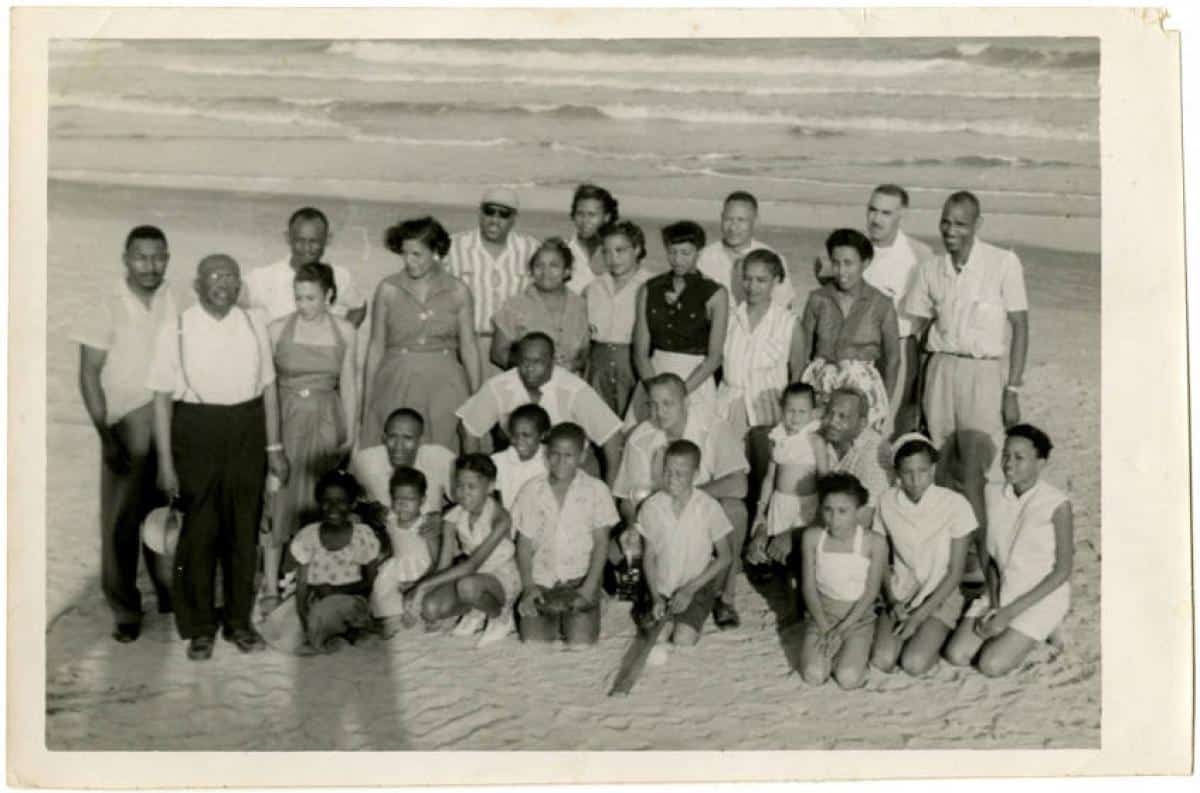
Atlantic Beach became one of the most important Black seaside communities on the Carolina coast during segregation. Its hotels, clubs, restaurants, performers, and packed summer crowds formed part of the larger coastal R&B culture that influenced Carolina Beach Music.
Beach Music Represented a Way Out of the Segregated Past and Toward Something New
That doesn’t mean the Beach Music scene magically solved segregation.
It absolutely did not.
Black musicians were frequently underpaid, denied credit, restricted from venues and forced to perform for audiences who could enjoy their music without necessarily supporting racial equality.
The story is complicated but culture often changes before laws and institutions do.
People hear each other’s music. They dance together. Records get bought, friendships form, and their children grow up thinking yesterday’s rules seem increasingly ridiculous.
Beach Music became one small part of that process in the Carolinas.
And right in the middle of all of it was a dance.

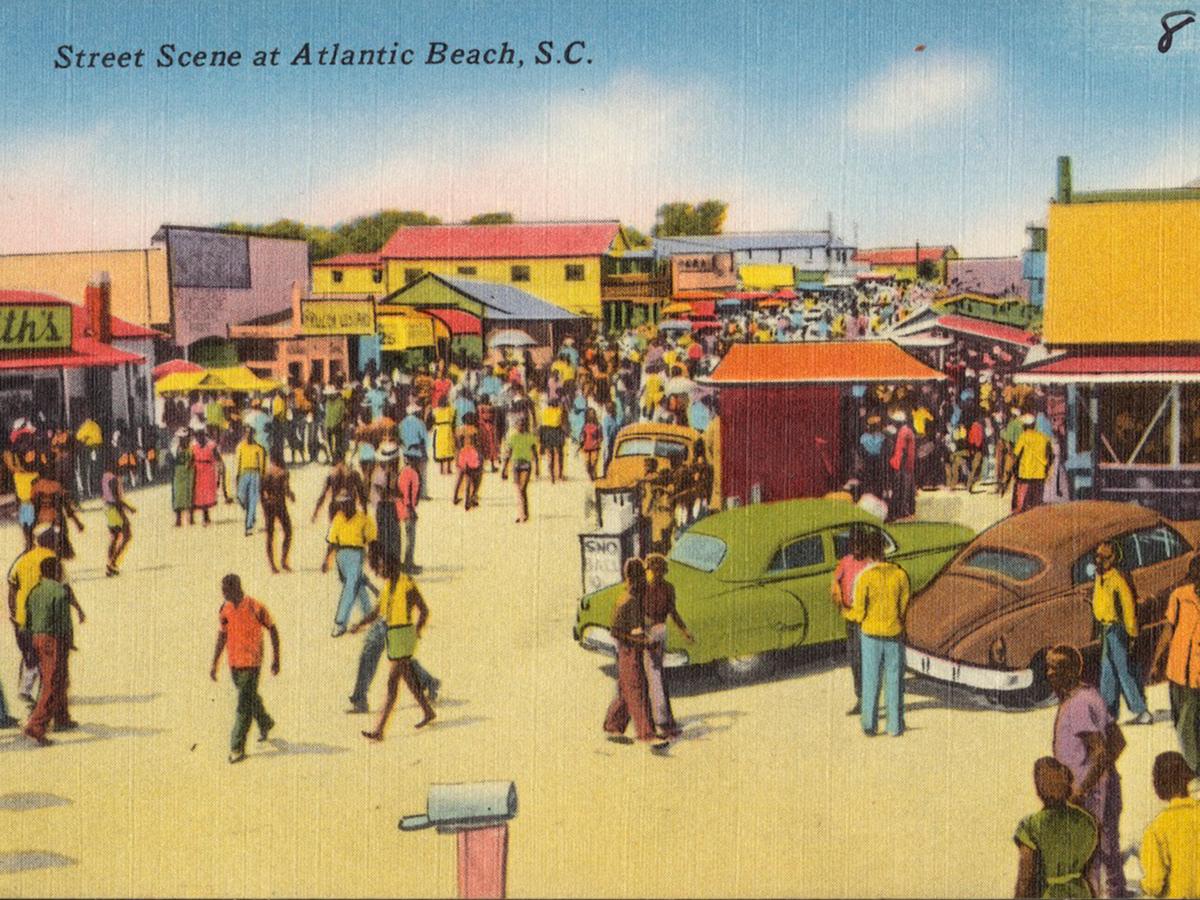
A crowded Atlantic Beach street during the community’s mid-century heyday. Black-owned hotels, restaurants, nightclubs, and entertainment venues made Atlantic Beach a major stop for travelers and performers moving through the Carolinas during the formative years of Beach Music and R&B.
The Carolina Shag: The Dance That Defined the Sound
You can’t really separate Carolina Beach Music from the shag.
The shag developed alongside the music, drawing from earlier swing-era dances including the jitterbug, Lindy Hop and other partner dances.
But the Carolina version evolved into something of its own.
Smooth. Relaxed. Rhythmic. A little flashy without looking like you’re trying too hard.
Which is an extremely Carolina way to dance.
The mid-tempo R&B records being played along the coast happened to fit it beautifully.
The dance influenced the records people wanted to hear, and the records influenced the way people danced. Eventually the two became almost inseparable.
That interaction between DJ, dancers and dance floor is something we still think about constantly when we’re building music for a North Carolina wedding reception.
The technology has changed.
The basic job really hasn’t.
A DJ watches the room, figures out what people are responding to, finds the next record and keeps the dance floor moving. Carolina Beach Music was built on that process.
Wrightsville Beach and Lumina: North Carolina’s Palace of Light
North Carolina had another enormous center of dance culture just up the coast.
In 1905, Lumina Pavilion opened at Wrightsville Beach near the end of Wilmington’s electric trolley line.
It was spectacular.
More than a thousand electric lights illuminated the building, earning it the nickname “The Palace of Light.”
Inside, visitors could bowl, eat, watch entertainment and, most importantly for our purposes, dance in the huge second-floor ballroom overlooking the Atlantic.
There’s an important distinction here: Lumina catered to white visitors, while places like Seabreeze developed partly because Black Carolinians were excluded from those same spaces.
Put the histories next to each other and you start to see how important dancing and nightlife were to coastal North Carolina generally, even while the people participating in that culture were separated by segregation.
Eventually, the music began crossing those boundaries even when the venues did not.

Inside Lumina Pavilion at Wrightsville Beach, generations of North Carolinians gathered for music and dancing overlooking the Atlantic. The famous “Palace of Light” was one of the state’s premier coastal entertainment venues and an important part of the dance culture that preceded Carolina Beach Music and the Carolina Shag. James Evans Postcard Collection, Center for Southeast North Carolina Archives and History, UNCW Library.
The Golden Era of Carolina Beach Music: The 1950s and 1960s
By the 1950s and early 1960s, the basic Beach Music canon was taking shape.
Groups like The Drifters, The Clovers, The Platters, The Coasters, Maurice Williams and the Zodiacs, and Billy Ward and His Dominoes became staples.
A few essential early Beach Music records include:
- Under the Boardwalk – The Drifters
- Sixty Minute Man – Billy Ward & His Dominoes
- Stay – Maurice Williams & The Zodiacs
- One Mint Julep – The Clovers
- I’ve Got Sand in My Shoes – The Drifters
- May I – Maurice Williams & The Zodiacs
Here’s another thing that makes Beach Music unusual:
A song doesn’t necessarily have to come from the Carolinas to become Carolina Beach Music. That’s because Beach Music isn’t really defined by geography in the normal way.
It’s defined by what Carolinians did with the records.
A New York R&B record could be released nationally, make its way south, become enormously popular with shag dancers around Wilmington or Myrtle Beach and eventually be remembered as a Beach Music classic.
Beach Music wasn’t simply created.
It was curated.
DJs, dancers, jukebox operators, record-store owners and club crowds collectively decided what belonged. As DJs ourselves, we find that part of the story particularly fascinating. The audience helped build the genre.

The Myrtle Beach Pavilion helped make the Carolina coast a destination for dancing, nightlife, and popular music. Along with clubs, pavilions, jukeboxes, and beach resorts throughout North and South Carolina, venues like this created the environment where Carolina Beach Music and shag culture flourished.
Then Carolina Started Making Its Own Beach Music
Eventually, local and regional bands began making music specifically for this audience.
Groups including The Catalinas, The Embers, The Tams, Band of Oz and Chairmen of the Board became inseparable from Carolina Beach Music.
North Carolina’s own The Embers are members of the North Carolina Music Hall of Fame and have spent decades carrying the Beach Music tradition throughout the state and beyond.
Now the feedback loop was complete.
Instead of Carolinians simply adopting R&B records from elsewhere, musicians were making records for the Beach Music audience itself.
The sound began developing a more explicitly regional identity.
You could hear R&B, soul, pop, horn-band arrangements, vocal harmonies and Southern influences all mixed together.
And critically: you could shag to it.
That’s always been the test.
Essential Classic Carolina Beach Music Songs
If you’re trying to understand the genre, this is a pretty good place to start:
- Carolina Girls – Chairmen of the Board
- Ms. Grace – The Tymes
- I Love Beach Music – The Embers
- Summertime’s Calling Me – The Catalinas
- Under the Boardwalk – The Drifters
- Sixty Minute Man – Billy Ward & His Dominoes
- Be Young, Be Foolish, Be Happy – The Tams
- 39-21-40 Shape – The Showmen
- Ocean Boulevard – Band of Oz
- Shama Lama Ding Dong – Band of Oz
- Myrtle Beach Days – Fantastic Shakers
- Give Me Just a Little More Time – Chairmen of the Board
- On the Beach – Chairmen of the Board
- Stay – Maurice Williams & The Zodiacs
- I’ve Got Sand in My Shoes – The Drifters
And yes, if you’re planning a Carolina wedding and your parents grew up with this music, you should probably expect at least a few of these to show up on the request list.
That’s exactly why our wedding music planning process doesn’t start with some generic list of “200 Wedding Songs.”
Your family’s musical history matters.
Why Didn’t Beach Music Disappear?
National music changed dramatically during the 1970s and 1980s.
Rock became enormous. Funk exploded. Disco came and went. Hip-hop appeared. Pop changed completely.
A regional youth culture built around 1950s R&B should probably have disappeared.
Most of them did.
Beach Music didn’t.
It certainly declined from its peak, but the infrastructure around it remained. Radio stations continued playing the records. DJs kept collecting them. Shag clubs kept dancing to them. Bands continued touring. Beach towns still had venues full of people who wanted to hear the music.
Organizations like the Society of Stranders helped maintain the shag community around North Myrtle Beach, while generations of Beach Music DJs kept introducing audiences to both classic records and newer songs that fit the sound.
That community is probably the single biggest reason the genre survived.
Beach Music never depended entirely on the national record industry.
It depended on people. Not just events like weddings at the pavilion, but in garages, kitchens, and bars.
Beach Music in the 1990s and the Modern Revival
By the 1990s, something interesting happened. Instead of Beach Music simply becoming “old music,” people started becoming consciously interested in preserving it.
Older performers continued touring.
Younger musicians joined the scene.
Shag organizations expanded.
Festivals grew.
The Carolina Beach Music Awards were established in the 1990s, creating another institution dedicated to recognizing musicians, DJs, songs and contributors to the culture.
At that point, Beach Music had done something remarkably difficult , it had survived long enough to become heritage without becoming a museum piece.
Most importantly – people were still dancing to it.
That meant that people were still making new records. From Alabama’s monster hit in this space that’s as comfortable at a wedding reception as it is at the cowboy bar, to the newer stuff that has the right rhythm and vibe, it kept growing.
Modern Carolina Beach Music Is Still Evolving
One of the biggest misconceptions about Beach Music is that it’s frozen sometime around 1964.
It isn’t.
Contemporary Beach Music bands are still recording new music, and Beach Music DJs continue doing exactly what their predecessors did decades ago:
They hear a record from somewhere else, realize shag dancers love it and adopt it.
That’s one of the coolest things about the genre, Beach Music has never cared very much what the record company called a song.
Soul?
R&B?
Pop?
Country-soul?
Doesn’t matter much. If it has the right groove, shaggers can dance to it and Carolina DJs keep playing it, eventually everybody just agrees:
That’s a Beach Music song now.
That was true when Carolinians adopted records by The Drifters and it’s still true today.
Beach Music Today
Today, Carolina Beach Music occupies a strange and wonderful place in Carolina culture. Yes, much of its traditional audience is older.
But the music hasn’t gone away.
The Embers still perform.
Band of Oz still performs.
Chairmen of the Board still perform.
Beach Music festivals still draw crowds and Shag clubs still operate.
Young people continue encountering the music through their parents and grandparents and we still play it at weddings.
That’s actually one of the things I love about being a wedding DJ in North Carolina.
You can go from Chappell Roan or Sabrina Carpenter to Earth, Wind & Fire, into Motown, then somebody’s dad asks for Carolina Girls, Grandma gets on the dance floor, and suddenly three generations of the same family are dancing together.
That’s not nostalgia for nostalgia’s sake.
That’s living culture.

For decades, the Myrtle Beach Pavilion stood at the center of the Grand Strand’s entertainment culture, surrounded by the clubs, dance floors, arcades, and nightlife that helped make Myrtle Beach synonymous with Carolina Beach Music and the shag.
So Why the Carolinas?
There isn’t one answer.
Geography helped.
The Carolina coast created a string of vacation towns where young people from inland communities could briefly escape normal social expectations.
DJs helped.
Radio stations continued playing the records, while DJs kept collecting them and shag clubs kept dancing to them. Bands continued touring, and beach towns still had venues full of people who wanted to hear the music.
The shag gave the music a reason to keep being played and generations of Carolinians simply decided they weren’t going to let it disappear.
There is also something wonderfully stubborn about maintaining a regional music culture long after the rest of the country has moved on.
That’s about as Carolina as it gets.
Beach Music isn’t just old R&B. It isn’t just shag music and it isn’t just something your parents listen to at the beach.
It’s the product of Black musical innovation, Southern youth culture, segregation and integration, dance halls, jukeboxes, DJs, beach towns, record collectors and generations of people who decided these songs still mattered.
Nearly 80 years after the first pieces of the culture started coming together, we’re still playing them.
That’s a pretty remarkable run.
Bringing Carolina Music Into Your Wedding
If you’re planning a wedding in Raleigh, Durham, Chapel Hill, Pinehurst, Wilmington or anywhere else in North Carolina, don’t feel like your wedding playlist has to sound like everybody else’s.
Maybe your family’s song is Carolina Girls. Maybe Grandpa wants to dance the shag. Maybe Mom absolutely needs to hear The Embers.
Maybe your crowd wants Beach Music for cocktail hour and house music by 10:00.
That’s fine.
Actually, that’s the fun part.
At Stylus Weddings, we build wedding music around the people who are actually going to be in the room. Our North Carolina wedding DJs work with couples to combine their music with the songs their families grew up loving, whether that means Beach Music, Motown, hip-hop, country, house music, Latin music or all of it in the same night.
Because a great wedding shouldn’t sound like somebody else’s wedding.
It should sound like yours.
Here’s a list of Classic Beach Music Essentials – the core of the canon:
Carolina Beach Music Old and New:
Classic Carolina Beach Music essentials
- Carolina Girls – Chairmen of the Board
- Ms. Grace – The Tymes
- I Love Beach Music – The Embers
- Summertime’s Calling Me – The Catalinas
- Under the Boardwalk – The Drifters
- Sixty Minute Man – Billy Ward & His Dominoes
- Be Young, Be Foolish, Be Happy – The Tams
- 39-21-40 Shape – The Showmen
- Ocean Boulevard – Band of Oz
- Shama Lama Ding Dong – Band of Oz
- Myrtle Beach Days – Fantastic Shakers
- Give Me Just a Little More Time – Chairmen of the Board
- On the Beach – Chairmen of the Board
- Lady Soul – The Temptations
- My Girl – The Temptations
- You’re More Than a Number in My Little Red Book – The Drifters
- I’ve Got Sand in My Shoes – The Drifters
- Stay – Maurice Williams & The Zodiacs
- May I – Maurice Williams & The Zodiacs
- Walking Up a One Way Street – Willie Tee
- Cool Me Out – Lamont Dozier
- Hold Back the Night – The Trammps
- With This Ring – The Platters
- Brenda – O.C. Smith
- Party Time Man – The Futures
- Thank You John – Willie Tee
- One Mint Julep – The Clovers
- Shake, Rattle and Roll – Big Joe Turner
- Stand By Me – Ben E. King
- Dancin’, Shaggin’ on the Boulevard – Alabama
Here’s a list of more Contemporary Carolina Beach Music songs rocking CBM spots today:
- Another Day – Too Much Sylvia
- The Beach & The Boulevard – Cat5 Band
- Tequila on Ice – Wayne Free
- I Never Wanted To – Deb Browning & Michael Fite
- Sunshine and Summertime – Deb Browning & Marlisa Kay Small
- My True Love – The Tams
- I’ll Be Loving You Always – Gary Lowder & Smokin’ Hot
- Something Said Love – Cat5 Band
- I Wanna Go Back – Too Much Sylvia
- Oceans Apart – Rivermist
- A Jukebox Playing 45’s – contemporary Beach Music release/CBMA-recognized track
- Who’s Gonna Baby You – Rhonda McDaniel & Phil Wilson
- The Beach And The Boulevard – Cat5 Band
- Something Smooth – General Johnson & Chairmen of the Board
- What You Do to Me – The Embers
- Take Care of You for Me – The Embers
- Turn Me Over – Coastline
- Broke – Teddy Swims & Thomas Rhett
- Somethin’ ’Bout a Woman – Teddy Swims & Thomas Rhett
- Stop Drop & Roll – Dion & Valerie Tyson
Explore Carolina Beach Music on Spotify, YouTube, and Apple Music and consider what songs you might like at your wedding whether it’s in Wrightsville Beach, Figure Out, Atlantic Beach, Sunset Isle, Myrtle Beach, or anywhere a bit further inland in the Carolina and beyond.